Car accident expert in Baumholder
Your own independent appraiser. We come to you.
A deer on the L 176, a hit-and-run outside Smith Barracks, a parking dent at the commissary – we inspect the car in person, on the ground in Baumholder.
Your car is damaged and you are stationed a long way from anything that feels familiar. If a German driver caused it, their insurance company moves quickly – and offers to send their appraiser. Under German law you may appoint your own independent vehicle appraiser (Kfz-Sachverständiger) instead. That appraiser works for you, not for the insurer. We are a German appraisal office with our own inspection hall, our own measuring equipment and a high-voltage qualification for electric vehicles – and we walk you through every page of the report in English.
German damages law (§ 249 BGB) lets you choose your own expert. If the other party is fully liable, their insurer normally covers the expert's fee.
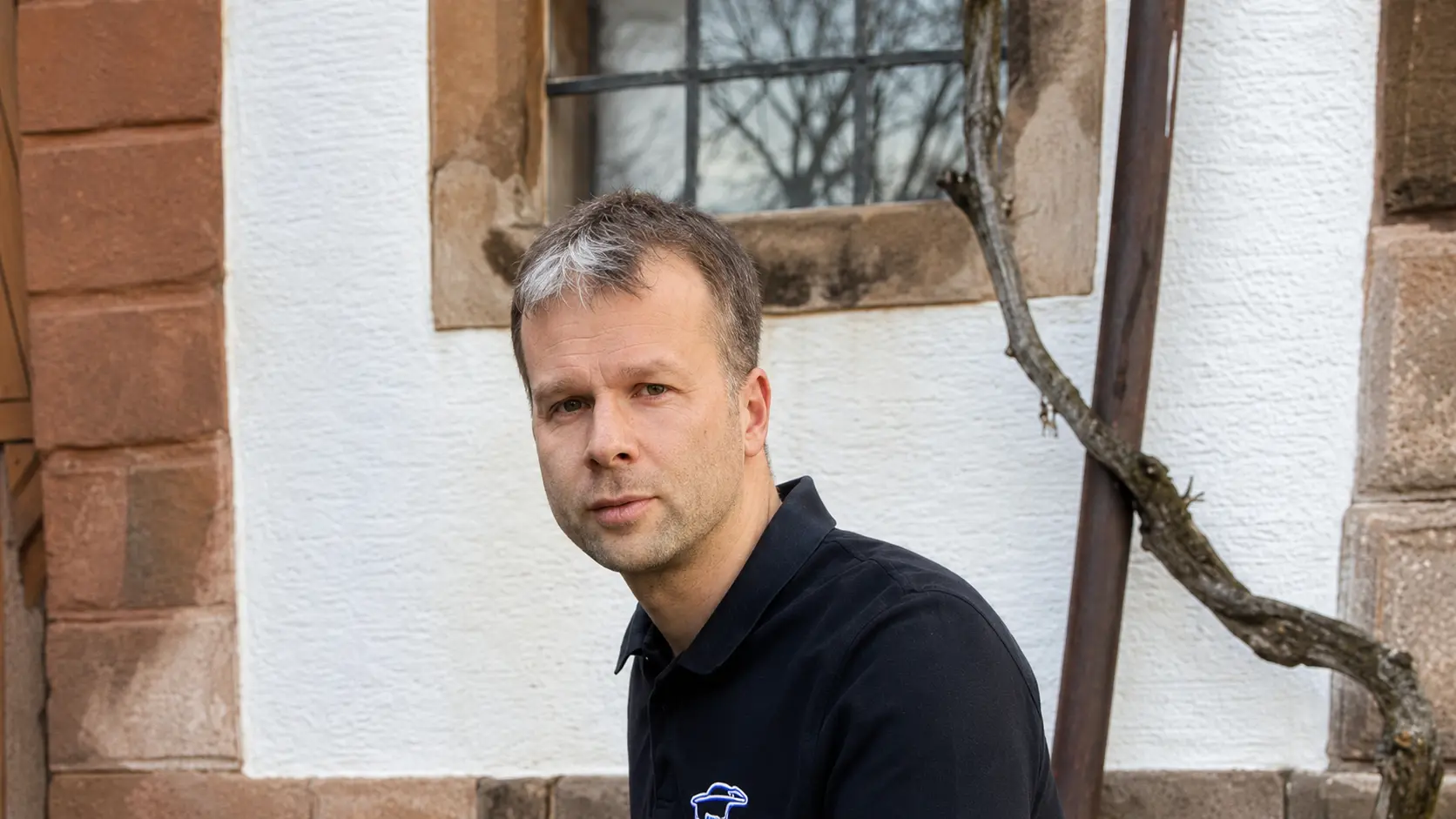
Gunther Bastian, Kfz-Meister (master technician) · owner – you speak to the expert himself, not to a call center: 0170 5229451
Kfz-Meister · Dozent an der Handwerkskammer (lecturer at the Chamber of Skilled Crafts) · DAT Expert Partner with SilverDAT 3 · certified to DIN EN ISO/IEC 17024 · consistently top reviews on Google
Stationed here, dealing with a wreck
Around 8,000 Americans live here. Nobody hands you the rulebook.
Baumholder is part of U.S. Army Garrison Rheinland-Pfalz. Smith Barracks and Wetzel Kaserne shape the town, and the community counts somewhere between 8,000 and 9,000 service members and their families in a place of roughly 4,500 German residents. It is a small, remote garrison surrounded by forest and farmland – good for training, hard on cars. When something hits your vehicle out here, the forms, the phone calls and the appraisal all arrive in German, and the clock starts before anyone explains how the system works.
Here is the short version. When another driver is at fault, you are entitled to your own independent appraisal of the damage, and you are entitled to have it done in plain English. You do not have to accept the figure the other side’s insurer puts in front of you. That is not a loophole – it is how German damages law is meant to work.
We are mobile. We do not keep an office in Baumholder – we drive to the vehicle, whether it sits in base housing, at a body shop, or where it came to rest after the collision. From Kusel it is about fifteen minutes over the L 176. The car does not have to be driveable for us to inspect it.
Where the money comes from
Who pays, and who gets to decide the amount
Every vehicle on a German road carries third-party liability insurance (Kfz-Haftpflicht). If a German driver causes your accident, your claim runs against that driver’s liability insurer – not against your own carrier. And the law that applies is the law of the place where it happened: a collision on the L 348 near Baumholder is settled under German rules, no matter what your policy back home says or which passport is in your pocket.
Once the claim is filed, the insurer assigns a claims representative who reviews the file and comes back with an offer. What goes into that offer is decided almost entirely by one document: the expert report. It sets the cost of repair, the diminished value (merkantile Wertminderung – the loss in market value a repaired accident car carries), the loss of use for the days you are without the car, and, if the vehicle is written off, the replacement value and the salvage value. Every euro you are offered traces back to that report.
§ 249 BGB, in the official English translation, says a person liable in damages “must restore the situation that would exist if the circumstance obliging him to pay damages had not occurred.” In plain terms: you are entitled to be put back where you were before the crash – and the report is what proves what that costs. A thin report produces a thin offer. A complete one, where every figure can be traced, leaves very little to argue about. That is the entire reason to bring your own appraiser rather than lean on the insurer’s. More on who carries the expert's fee (German) →
First things first
What to do right now – in order
- 1Secure the scene and call the police (110). On rural roads around Baumholder – deer country – wait for the officers if anyone is hurt or the damage is significant. Do not admit fault; that is not your job to decide at the roadside.
- 2Photograph everything, before anything is moved. The other plate, the position of the cars, the road, the point of impact, close-ups of the damage. On a deer strike, photograph any hair, blood or contact marks – and note the police file number.
- 3Tell your own insurer what happened. If the damage falls under your own comprehensive cover (a deer, a hit-and-run you cannot trace), your carrier is your partner. If someone else caused it, they still need to be told – but they are not the ones who decide what your damage is worth.
- 4Call us before the repair starts. Once a panel is replaced or the car is straightened, the evidence is gone. We inspect the damage while it still exists – usually the same or the next working day.
- 5Do not sign away your choice. If the other insurer offers to “take care of everything,” that convenience usually means their appraiser, their figure. You are allowed to say you want your own expert first. See choosing your own expert (German) → and your rights after an accident (German) →
How we work
Deer strikes and hit-and-runs: securing the traces before they vanish
The roads around Baumholder are why this matters. In 2025 the Baumholder police district recorded 361 traffic accidents – 167 of them wildlife collisions, and 54 hit-and-runs. The wildlife hotspots are the L 176 between Ruschberg and Frauenberg, the L 169 towards Niederalben, and the L 348 near Berschweiler; roughly nine in ten of the animals are roe deer, most often in the hours around dawn and again from late afternoon into the night. In a hit-and-run, the person who caused it is gone – so the only witness left is the car itself. That is a job of evidence, and evidence is what our equipment is built to capture.
Contact traces under raking light. When another vehicle brushed yours and drove off, it usually left something behind – transferred paint, a scuff pattern, a directional scratch. We dust the panel with contrast powder (developer powder) and light it from a low angle, so the relief of the mark stands out that a flat photo would miss. It tells us the height and direction of the contact, which is exactly what a distant claims file tends to dismiss as “unexplained.”
Paint thickness as a measured series, not a single reading. We take coating-thickness readings in microns across each panel – several points per part, not one – so a re-sprayed section, filler under the surface or an older repair shows up as a pattern rather than a guess. On a used POV bought here, that same series separates fresh accident damage from wear the car already carried.
Underbody and geometry in our own inspection hall. A wildlife impact or a shove into a curb often bends what you cannot see from above. In our own hall we put the car on one of three lifts and check the underbody, then measure axle and body geometry – because “it pulls a little” is a feeling, and a measured value is proof. Fault memory and the calibration status of driver-assistance systems are read with Launch and Hella Gutmann testers; a camera or radar knocked out of alignment by the impact belongs in the report, not in a surprise bill later.
Electric vehicles: voltage first. If your POV is electric, we treat the high-voltage system as the first step, not an afterthought. Every one of our vehicles carries the full high-voltage kit, we hold qualification level 3S, and we verify the absence of voltage with a Bosch BIT 1000 insulation tester before any close inspection. The battery’s State of Health is read as a measured percentage with AVILOO – a number that matters most when you are about to sell before a PCS move.
One hard limit, stated plainly: we document what is on the vehicle – the marks, the measurements, the values. We do not reconstruct how the crash happened. That line keeps the report clean and keeps us in our lane. See our technical equipment (German) →
Your POV is a special case
Registered differently. Damaged the same.
Your privately owned vehicle is registered through the U.S. Forces vehicle registration process, not the German Zulassungsstelle, and the USAREUR plates remain U.S. government property that has to be handed back when you dispose of the car. Your proof of third-party liability cover – the Insurance Confirmation Card, or a German Deckungskarte – is what let you put plates on it in the first place. None of that changes how the damage is assessed under German law, but it does change the paperwork around a total loss or a sale, and it is worth having straight before you rotate out.
If the car is a US-spec import, the valuation needs extra care: parts prices, availability and the market value of a left-hand-drive US model in Germany are not the same as the European version. As a DAT Expert Partner we calculate with SilverDAT 3, and we show how we reached each figure rather than pulling one from a database and hoping nobody asks. If you are selling before you leave, a documented valuation is worth more than a listing price you had to defend – see vehicle valuations (German) →
A common question
“But I have USAA.” “But I have GEICO.”
Most drivers at this garrison are covered through USAA’s Europe auto policy, through GEICO’s overseas programme for military members, or directly with a German insurer. Whichever it is, that policy is what you show for your own coverage – but it is not what decides who appraises your car when a German driver is at fault. That claim runs against the other driver’s German liability insurer, and German damages law governs the amount.
So tell your carrier what happened – absolutely. Then bring in an expert who is independent of everyone in the file. We are not part of any insurer’s network, and we do not act for USAA, for GEICO or for any company on the other side of your claim. We work for the person whose car was damaged. If you are unsure which route fits your situation, ask us before you commit to anything – that first call only takes five minutes.
Said plainly
What we do – and what we do not do
We do
Inspect the vehicle in person, on the ground in Baumholder. Measure and document the damage, the diminished value and the loss of use. Calculate with SilverDAT 3. Assess total loss, replacement and salvage value. Read out the report to you in English. Answer the insurer in writing when they cut a position – see insurer audit reports (German) →
We do not
We are not lawyers and we do not give legal advice – for that you want a Fachanwalt für Verkehrsrecht. We do not repair cars and we do not trade in them, so we earn nothing from what we find. And we do not reconstruct the accident – we document the vehicle, not the crash.
Related, in German: accident appraisal → · comprehensive & deer-strike claims → · wildlife-damage certificate → · total loss explained → · diminished value →
No obligation
Five minutes on the phone – in English
You do not have to decide anything today. Call, describe the damage, and we will tell you honestly whether a full expert report makes sense, whether a shorter cost calculation is enough, or whether you are better off leaving it alone – that happens too. You will be talking to the appraiser himself, not a call center.
Reachable daily from 06:00 to 22:00. Outside those hours an emergency call centre takes your message.
Our services
What we can do for you
Accident report (not your fault)
Repair cost, diminished value, loss of use, replacement and salvage value – settled directly with the liable insurer.
accident appraisal (German) →Deer strike & comprehensive
Wildlife, hail, theft, vandalism. Here the policy wording decides, not § 249 BGB – so the documentation has to be airtight.
wildlife-damage certificate (German) →Valuation before you PCS
Selling the POV before you rotate out? A documented valuation is worth more than a listing price you had to argue about.
vehicle valuations (German) →Used car check before you buy
Buying privately in Germany? We look at the car with you before the money moves – paint thickness series, underbody, fault memory.
used car check (German) →Electric vehicles
High-voltage qualification level 3S, Bosch BIT 1000 insulation tester, AVILOO State of Health as a measured percentage.
EV battery check (German) →When the insurer cuts the report
We answer the audit report in writing and explain, technically, why each contested position belongs in the file.
insurer audit reports (German) →FAQ
Frequently asked questions
Am I really allowed to pick my own appraiser?
Under German damages law – § 249 BGB together with long-standing German case law – the injured party may as a rule commission an independent expert to assess the damage, and the cost of that expert is part of the claim against the liable party. The other side’s insurer may send its own appraiser, but you are not required to accept that appraisal as the basis for your claim.
Can you come on post, or to base housing in Baumholder?
We come to wherever the vehicle is, and access rules differ from installation to installation. In practice the simplest solution is often to meet at your housing area, at the body shop, or just outside the gate. Tell us where the car is and we will find a way to it – it does not have to be driveable.
It was a deer, and no other driver is involved. Do you still help?
Yes. A wildlife strike normally falls under your own comprehensive cover, where the policy wording decides rather than § 249 BGB. The documentation still has to hold up – the animal, the point of impact, the contact traces – and a wildlife-damage certificate is often part of it. We measure and record all of it so the claim is not left to interpretation.
Someone hit my car and drove off. Is there anything to document?
Often yes. Even a hit-and-run leaves traces – transferred paint, a directional scratch, a scuff at a specific height. We bring those out with contrast powder under raking light and record them properly. Whether the damage then runs against your own comprehensive cover or elsewhere depends on your policy, and that is a question for your insurer or a lawyer – but the physical evidence should be secured before it is cleaned or repaired.
My car is a US-spec import. Can you still value it?
Yes. We calculate with SilverDAT 3 as a DAT Expert Partner, and US-spec vehicles need extra care: parts prices, availability and the market value of a left-hand-drive US model in Germany differ from the European version. We document how we arrived at the figures rather than pulling a number from a database and hoping nobody asks.
The other insurer already sent an appraiser. Is it too late?
Not necessarily – as long as the car has not been repaired. While the damage still exists, it can still be documented and measured. Call us before the repair starts; once the panel is replaced, the evidence is gone.
The information on this page is general orientation and does not replace individual legal advice. For specific legal questions, please consult a German lawyer specialising in traffic law (Fachanwalt für Verkehrsrecht).
More questions? see all frequently asked questions (German) → · our partner lawyers (German) →
What our customers say
Consistently top reviews on Google
Real reviews are displayed here through our review widget – unfiltered and unedited.
Call us. We will take it from there.
Independent. In person. Explained in English.
Where to go next
In English
Car accident expert Kaiserslautern (KMC) →
Car accident expert near Ramstein Air Base →
Kfz-Gutachter Baumholder – the German page →
Locations: all locations (German) → · Kfz-Gutachter Westpfalz →
Provider & contact
Bastian Kfz-Gutachter Sachverständigenbüro e.K.
Owner: Gunther Bastian, Kfz-Meister (master technician)
Bergstraße 2 · 66871 Theisbergstegen · Germany
Phone: 0170 5229451 ·
E-mail: info@sv-bastian.de
Reachable daily from 06:00 to 22:00.
We do not maintain an office in Baumholder – we come to you as mobile appraisers, from Kusel about fifteen minutes over the L 176.
Imprint · Privacy policy